US Supreme Court in Jules v. Andre Balazs Properties: who hears the challenge to an award
On 14 May 2026 the US Supreme Court held unanimously that a federal court which stayed claims for arbitration keeps jurisdiction to confirm or vacate the resulting award. What the ruling settles, what it leaves open, and why seat choice still matters.
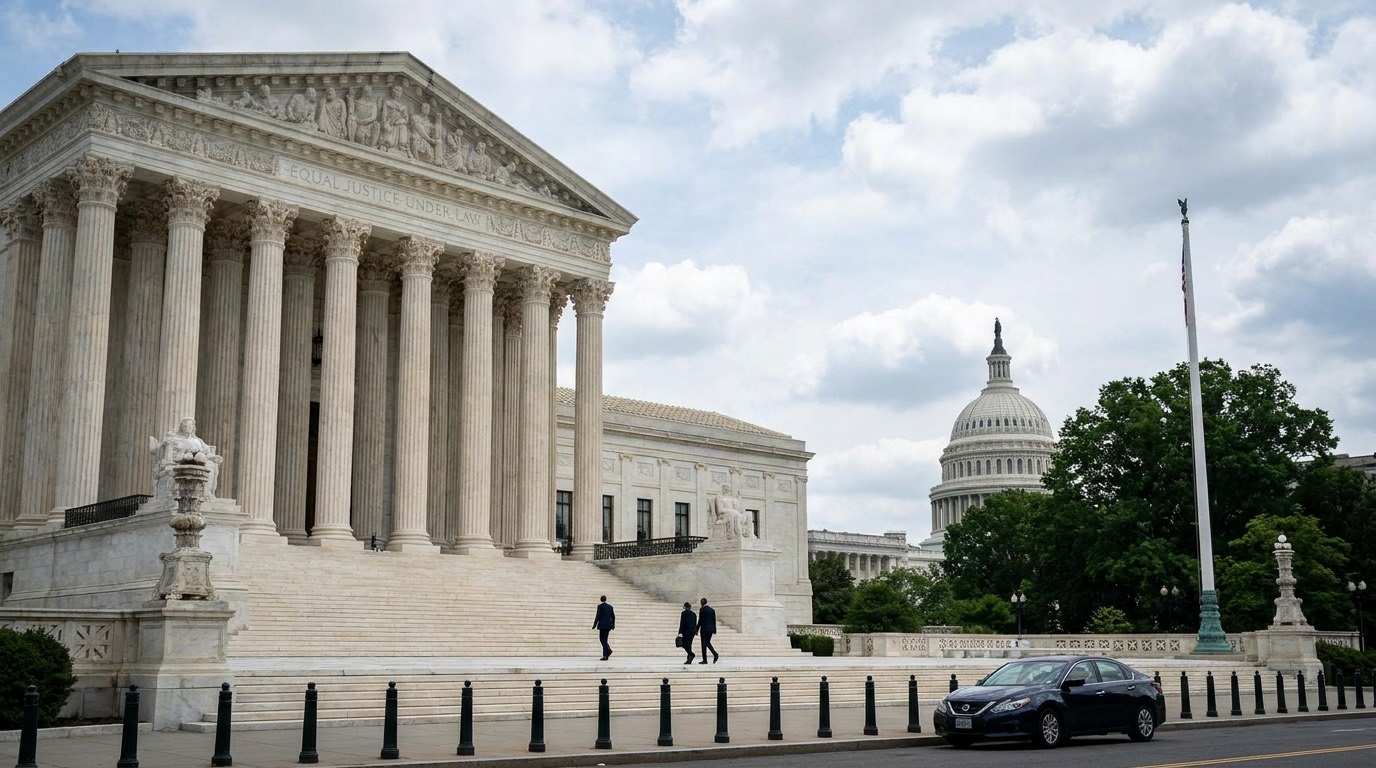
On 14 May 2026 the US Supreme Court decided Jules v. Andre Balazs Properties (No. 25-83). In a unanimous opinion by Justice Sotomayor, it held that a federal court which has jurisdiction over claims, and stays them under section 3 of the Federal Arbitration Act (FAA) so that they can be arbitrated, keeps jurisdiction to decide later motions under sections 9 and 10 of the FAA to confirm or vacate the resulting award. The Court affirmed the Second Circuit and resolved a split among the circuits. This is a domestic employment case, but it clarifies a procedural question that matters wherever a US court is involved in an arbitration.
The facts and the holding
As summarised in the opinion, Adrian Jules worked at the Chateau Marmont Hotel in Los Angeles from 2017 to 2020. After his employment ended, he sued in federal court in New York alleging discrimination under federal and state law. The district court found that his arbitration agreement covered the claims and stayed the case in 2021. In 2023 the arbitrator ruled against Jules on all claims and awarded about USD 34,500 in sanctions. The respondents moved in the district court to confirm the award, and Jules cross-moved to vacate it, arguing that, after the Court's 2022 decision in Badgerow v. Walters, the court lacked jurisdiction. The district court confirmed the award and the Second Circuit affirmed.
Badgerow had held that a court cannot "look through" a freestanding application to confirm or vacate an award to the underlying dispute in order to find federal jurisdiction. In Jules the Court said that Badgerow does not apply in the same way where the case was originally filed in federal court and the motion is made within that pending case. The original federal-question claims supply the jurisdiction. The Court relied on its earlier decision in Smith v. Spizzirri, under which section 3 requires a stay rather than a dismissal, so that the court can supervise the arbitration through to confirmation or vacatur. It noted that the third and seventh circuits agreed with the Second, while the Fourth Circuit had applied Badgerow to all such motions.
Jules had argued that the rule would encourage parties to file "useless federal litigation" to create a "jurisdictional anchor". The Court called that concern conjectural, observing that there was no evidence of such filings and that a precautionary federal suit risks forfeiting the right to arbitrate.
What it means in practice
The following is our analysis. The opinion, as reported, does not address foreign or international awards, and it leaves Badgerow in place for freestanding applications. Three points follow for parties.
- The path of the dispute affects the court that polices the award. Where claims start in a US federal court and are then stayed for arbitration, the same court can confirm or vacate the award, without a second jurisdictional hurdle. Where arbitration starts without any prior court case, an application to confirm or vacate still needs an independent basis for federal jurisdiction.
- Precautionary filings carry a price. The Court's remark on forfeiture is a reminder that litigating on the merits in court before invoking the clause can cost a party its right to arbitrate. Parties who intend to arbitrate should invoke the clause first.
- Procedure around the award is part of the bargain. The ruling removes uncertainty for stayed cases, but the question of which court reviews an award, on which grounds and after how many steps, still varies sharply between legal systems. In-house counsel should treat it as a contract term with a cost, not as a detail.
Choosing the forum with review in mind
The case shows how much the post-award stage depends on rules of court jurisdiction that sit outside the arbitration agreement itself. For parties that want that stage to be predictable, the choice of seat is the main lever, because the law of the seat determines which court hears a challenge and on what grounds. A seat with a statute written for international arbitration, a narrow scope of review and wide recognition abroad reduces the number of places where the same award can be reopened. At GIDI the seat is Geneva, governed by Chapter 12 of the Swiss Private International Law Act, which provides for narrow court review, and awards can be enforced in more than 170 New York Convention states.