US Supreme Court in Devas v Antrix: no extra 'minimum contacts' test to enforce awards against foreign states
On 5 June 2025 the US Supreme Court held that personal jurisdiction over a foreign state under the FSIA requires only an applicable exception and proper service. We explain what remains open and what it means for contracts with state-owned counterparties.
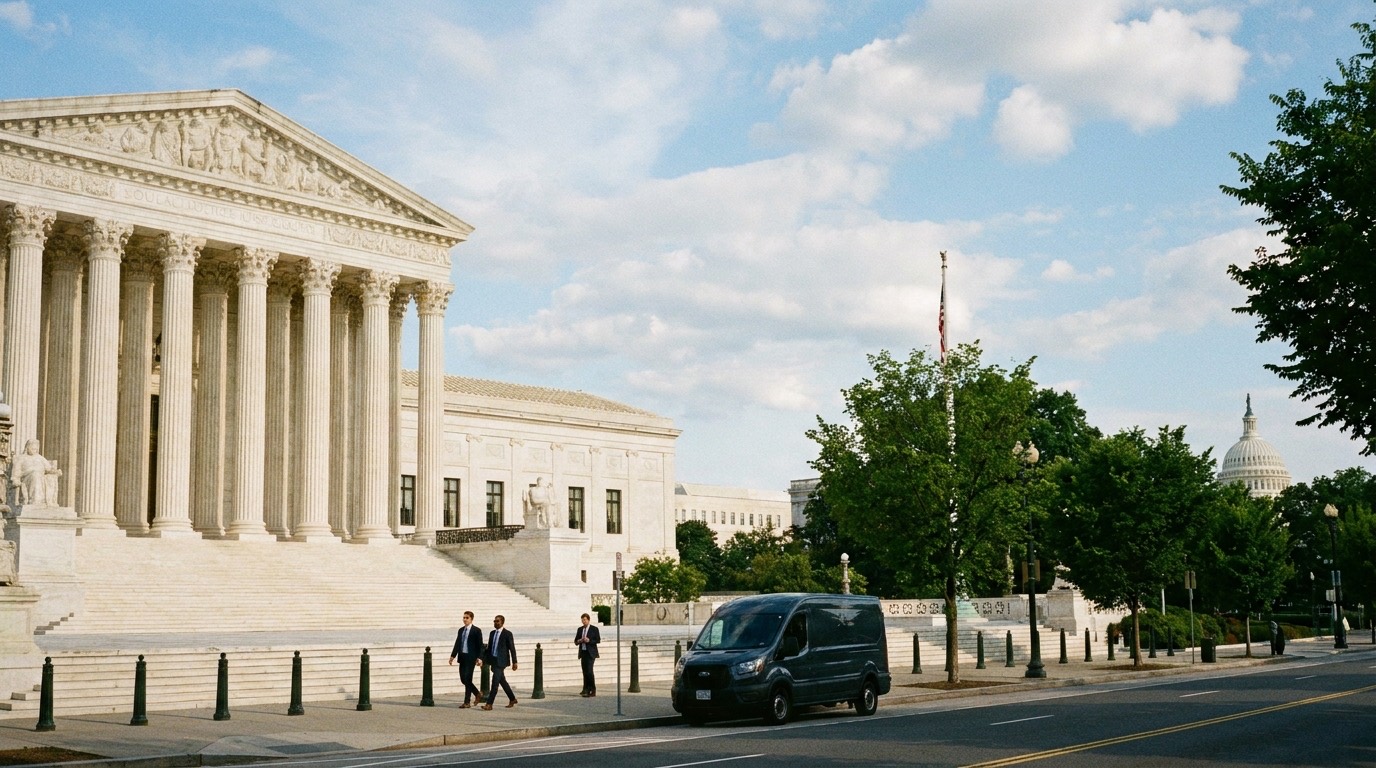
On 5 June 2025 the United States Supreme Court decided CC/Devas (Mauritius) Ltd v Antrix Corp, a case about enforcing an arbitral award against a company owned by a foreign state. In a unanimous opinion written by Justice Alito, the Court held that a US court has personal jurisdiction over a foreign state or its instrumentality under the Foreign Sovereign Immunities Act (FSIA) once a statutory exception to immunity applies and service has been made in the manner the Act prescribes. No separate "minimum contacts" showing is required.
What the Court decided
Antrix Corporation is organised under Indian law and owned by the Republic of India for its Department of Space; it is the commercial arm of the Indian Space Research Organisation. In January 2005 it signed a satellite-leasing agreement with Devas Multimedia, an Indian company. In February 2011, shortly before launch, the Indian Government needed the satellite capacity for itself and Antrix terminated the contract on force majeure grounds. Devas invoked the arbitration clause. On 14 September 2015 a three-member tribunal unanimously ruled in its favour and awarded USD 562.5 million plus interest.
Devas had the award confirmed in France and in the United Kingdom. In September 2018 it petitioned the US District Court for the Western District of Washington, relying on the FSIA's arbitration exception. The district court confirmed the award and entered a judgment of USD 1.29 billion. On 1 August 2023 the Ninth Circuit reversed. It accepted that Antrix is a foreign state, that service was proper and that an immunity exception applied, but, bound by circuit precedent, it required a traditional minimum-contacts analysis and found that Antrix lacked sufficient contacts with the United States.
The Supreme Court reversed. Section 1330(b) of Title 28 has two requirements: subject-matter jurisdiction, which exists whenever an immunity exception applies, and service under the FSIA's own rules. When both are met, personal jurisdiction "shall exist". The provision says nothing about minimum contacts, and the Court declined to add the requirement. It also noted that the immunity exceptions already demand varying degrees of connection with the United States, so a further general test would disturb the structure of the statute.
The Court did not decide everything. It left for the Ninth Circuit on remand Antrix's alternative arguments: whether the Fifth Amendment's Due Process Clause independently requires minimum contacts, whether the claims fall within the arbitration exception "properly conceived", and whether the case should be dismissed on forum non conveniens grounds.
What it means for contracts and enforcement
The reported facts are narrow: a procedural hurdle has been removed, not an award enforced. A creditor must still prove that a specific FSIA exception applies and that service complied with the Act, and the defences left open may be argued again. In practice, the decision makes US courts a more predictable venue for award creditors dealing with state-owned entities, but it does not make enforcement automatic.
The timeline is itself a lesson. The contract was terminated in 2011, the award issued in 2015, the US petition was filed in 2018 and the Supreme Court ruled in 2025. Parties dealing with state-owned counterparties should plan for enforcement as a multi-year, multi-jurisdiction exercise. Devas pursued confirmation in France and the United Kingdom as well as the United States, which illustrates why the choice of seat matters: an award from a seat in a New York Convention state can be taken to several courts in parallel.
Parties should consider several drafting and process points:
- Identify the counterparty precisely, including whether it is a state organ, a state-owned company or a private subsidiary, because the answer drives which immunity rules apply.
- Draft an unambiguous arbitration agreement and, where the governing law permits, an express waiver of immunity from jurisdiction and from execution.
- Record a process agent and service address for the counterparty, since proper service is one of the two conditions the Court identified.
- Map likely asset locations at the outset, so that enforcement venues are chosen deliberately rather than discovered after the award.
Choosing and designing the forum
For counsel, the case is a reminder that an award is only as valuable as its enforceability against the assets that matter. The forum and seat should be selected with enforcement in mind: a seat whose courts review awards narrowly, a legal system that is a party to the New York Convention, and procedural rules that leave little room for later disputes about how the tribunal was constituted or how the proceedings were run. A seat in Geneva, governed by Chapter 12 of the Swiss Private International Law Act, offers narrow court review of the award, and the New York Convention is in force in more than 170 states; GIDI administers arbitrations seated there under rules the parties choose, including UNCITRAL or bespoke procedures.