US Solicitor General urges Supreme Court to deny review in Spain's intra-EU award enforcement case
On 26 May 2026 the United States told the Supreme Court that Spain's petition in Kingdom of Spain v. Blasket should be denied, while agreeing that the D.C. Circuit erred on who decides whether an agreement to arbitrate exists.
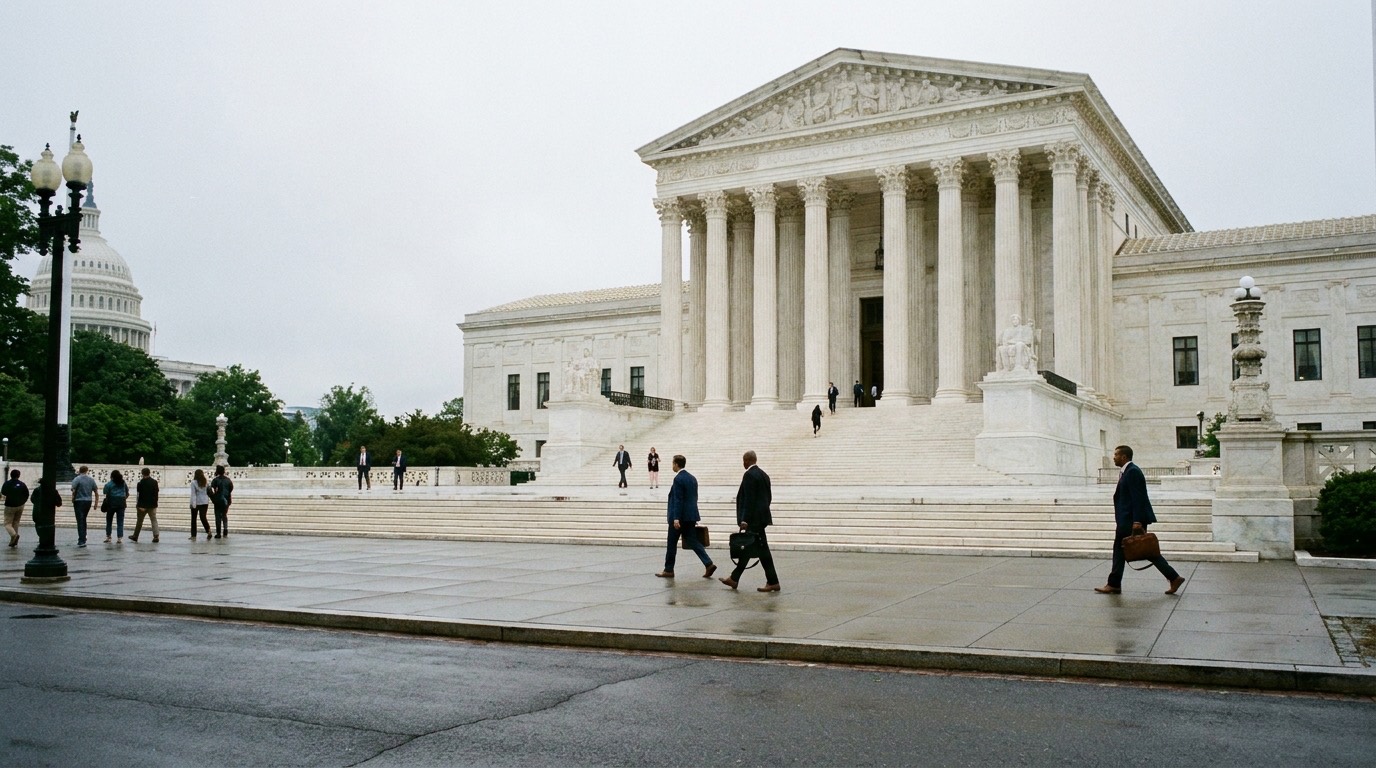
On 26 May 2026 the United States filed a brief as amicus curiae in the US Supreme Court, at the Court's invitation, on the petition for certiorari in Kingdom of Spain v. Blasket Renewable Investments LLC (No. 24-1130). The United States recommends that the petition be denied. The case concerns the enforcement in the US of Energy Charter Treaty awards against Spain, and the petition remains pending.
The background and the brief
The petition arises from a consolidated D.C. Circuit decision of August 2024 in enforcement actions brought by Blasket Renewable Investments, 9REN Holding and NextEra Energy Global Holdings against Spain. Spain's position is that, under the Court of Justice's Achmea (2018) and Komstroy (2021) decisions, intra-EU investment arbitration is incompatible with EU law, so that it never validly agreed to arbitrate with investors from other member states and the arbitration exception in the Foreign Sovereign Immunities Act (FSIA) does not apply. According to a commentary by Debevoise & Plimpton lawyers on the Transnational Litigation Blog (3 June 2026), the D.C. Circuit treated this as a question of the treaty's scope for the arbitrators. Spain filed its petition in May 2025, and the Supreme Court asked for the views of the Solicitor General in October 2025.
As summarised on the italaw website and in that commentary, the brief makes three points. First, it agrees with Spain that the D.C. Circuit erred: whether there is an agreement to arbitrate "with or for the benefit of" the plaintiff is a threshold jurisdictional question for the courts, not one delegated to arbitrators. Second, it argues that Spain would probably lose even on a correct analysis, because, relying on the Vienna Convention on the Law of Treaties, Spain cannot invoke its domestic law, including its obligations under EU law, to undo its "unconditional consent" to arbitration in the Energy Charter Treaty. Third, on whether a court may dismiss an enforcement action on forum non conveniens grounds, where the D.C. Circuit and the Second Circuit differ, it calls the case a poor vehicle because the record is undeveloped on whether an adequate alternative forum exists.
What this means in practice
The following is our analysis, not part of the reported position. The brief is not a decision, and the Court may grant or deny review. Three practical points nevertheless stand out.
- Consent to arbitrate is the contest. States and state entities increasingly resist enforcement by attacking the existence of the agreement to arbitrate rather than the merits. Whether a court or the tribunal decides that question, and at what stage, shapes the cost and timing of enforcement. Parties dealing with state counterparties should state their consent clearly, name the parties to the agreement directly, and address immunity expressly.
- Who holds the award matters. The commentary cautions that a reading focused on the particular plaintiff before the enforcement court sits uneasily with assignments of awards, such as Blasket's position as successor to an original creditor. Anyone planning to sell or finance an award should take advice on how an assignee will be treated in the enforcement forum.
- Enforcement is a multi-forum exercise. The same awards face a standoff between EU courts and tribunals on one side and courts elsewhere on the other. A creditor should map where the debtor's assets are and which courts will treat the arbitration agreement as binding, before choosing where to bring an action.
Designing the forum around enforcement
For commercial parties without a State on the other side, the lesson is similar in kind. Enforcement outcomes depend on how clearly the arbitration agreement records the parties' consent, on the law of the seat, and on the courts at the place of enforcement. A seat with a narrow scope of court review and a wide network of New York Convention states reduces the number of places in which a challenge to jurisdiction can be reopened. At GIDI, the seat is Geneva, where Chapter 12 of the Swiss Private International Law Act applies and court review is narrow, and awards can be enforced in more than 170 New York Convention states.