UNCITRAL colloquium on AI in dispute resolution: what was discussed and what parties can do now
On 16 and 17 February 2026 UNCITRAL held a colloquium in New York on AI and remote hearings in arbitration and mediation. No new instrument has emerged, but the direction is clear enough to draft for.
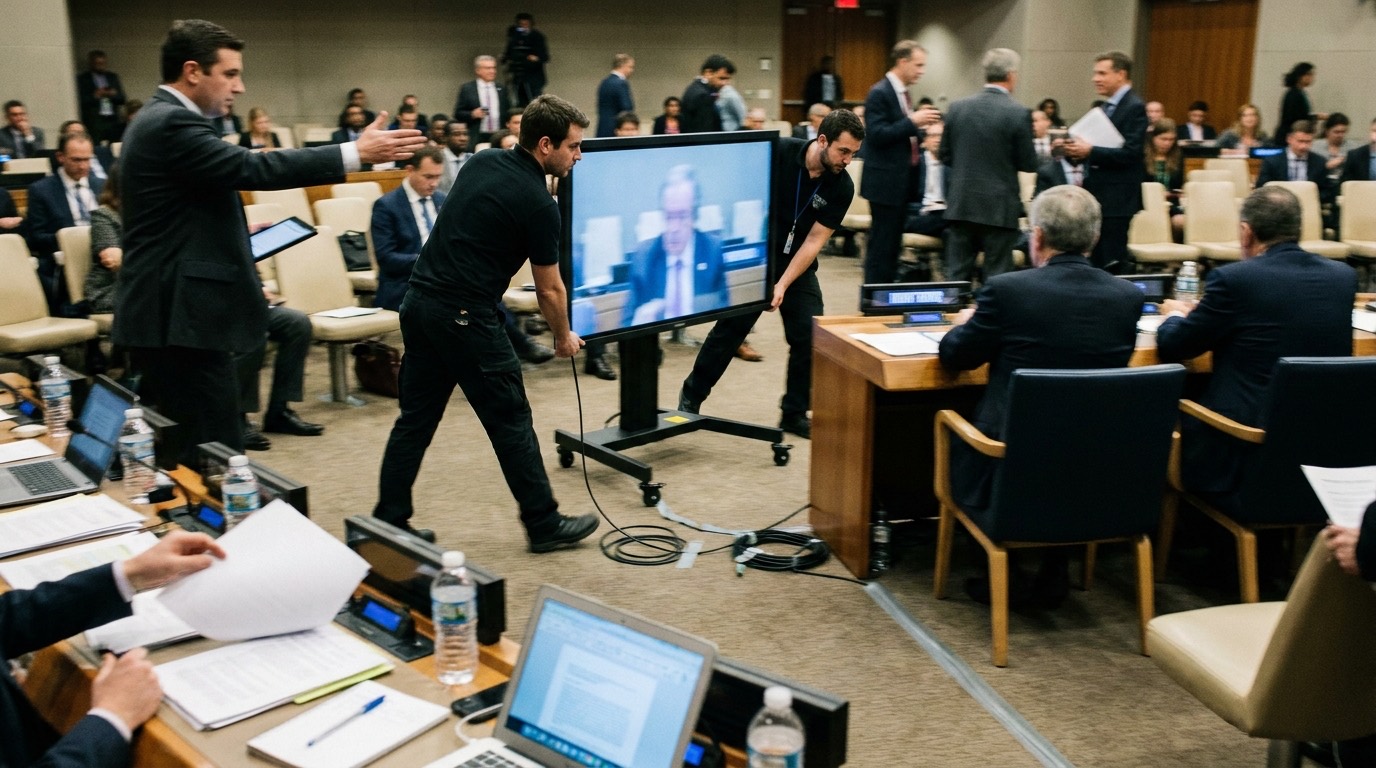
On 16 and 17 February 2026 the United Nations Commission on International Trade Law (UNCITRAL) held a colloquium at United Nations Headquarters in New York on the use of artificial intelligence in dispute resolution and on remote hearings in arbitration and mediation. It took place alongside the 83rd session of UNCITRAL Working Group II (Dispute Settlement), which ran from 16 to 20 February 2026. The colloquium produced no text, and none was expected. Its importance lies in the fact that the body behind the UNCITRAL Arbitration Rules, the Model Law and the Singapore Convention on Mediation is examining how AI affects arbitration.
What UNCITRAL was asked to do
According to UNCITRAL's own page for the event, the Commission asked the secretariat at its fifty-eighth session to continue exploratory work on three topics: AI in dispute resolution, guidance for remote hearings in arbitration and remote mediation, and platform-based dispute resolution. The colloquium covered the first two, so that the Working Group could prepare a recommendation for the Commission's fifty-ninth session. The programme had three panels: arbitrators' use of AI and its impact on recognition and enforcement; AI in mediation and remote mediation; and procedural guidance and best practices for remote arbitration hearings. A compilation of responses to an UNCITRAL questionnaire on these subjects was among the listed background documents.
A report from CIETAC, which attended the Working Group session as an observer, says the session concentrated on the recognition and enforcement of electronic arbitral awards. It records broad agreement that awards should not be denied recognition or enforcement solely because they are in electronic form. The same report says experts from the LCIA, the American Arbitration Association, the Dubai Financial Court, the Silicon Valley Arbitration and Mediation Center (SVAMC), the Chartered Institute of Arbitrators and the ICC shared practices at the colloquium. It does not record specific conclusions from the panels.
SVAMC reported that its board member Professor Crenguta Leaua proposed three areas for future UNCITRAL work: defining arbitrator independence and impartiality in relation to AI tools so that decisions remain grounded in human judgment; procedural mechanisms that adapt as technology changes, described as dynamic due process; and keeping decisions ex aequo et bono exclusively human. She argued that UNCITRAL is well placed to develop harmonised principles that align institutional rules, ad hoc arbitration and judicial enforcement.
What this means for contracts and disputes
The following is our analysis. Because no instrument has been adopted, parties cannot rely on a uniform global standard for AI in arbitration, and they will not have one for some time. The topics UNCITRAL chose are nonetheless the ones that most often cause practical problems.
- Arbitrator use of AI. Parties should consider agreeing in the clause or the first procedural order that the tribunal may use AI tools only as an aid, that it remains responsible for the reasoning of the award, and that material use is disclosed.
- Form of the award. If an award may be issued electronically, parties should confirm that the law of the seat and of the likely place of enforcement accepts it. The broad agreement recorded at the Working Group is encouraging, but it is not a rule of law.
- Confidential material. Pleadings, witness statements and expert reports are often confidential. A procedural order should say whether such material may be entered into third-party AI tools and under what safeguards.
- Remote hearings. Parties should settle early whether hearings are in person, remote or hybrid, how witness evidence is protected, and who bears the technical risk.
These points can be written into the arbitration agreement or into a short AI protocol agreed at the first case-management conference. Earlier guidance, such as the SVAMC guidelines of 2024, can be used as a drafting reference.
Choosing a forum that lets you set the rules
While international standards on AI are still being formed, the party-agreed procedure is the most dependable place to set expectations. Parties should favour a forum that allows them to choose their own rules and add an AI protocol without friction. GIDI lets parties select their own rules, whether institutional rules, the UNCITRAL Rules or a bespoke procedure, and, with both parties' consent, to conduct proceedings fully remotely.