Singapore court rejects Russia's immunity plea against Yukos awards: seat-court decisions and enforcement
In July 2025 the Singapore International Commercial Court held that Russia was precluded from re-arguing immunity after Dutch seat courts had decided the point. We explain why seat choice matters for enforcement.
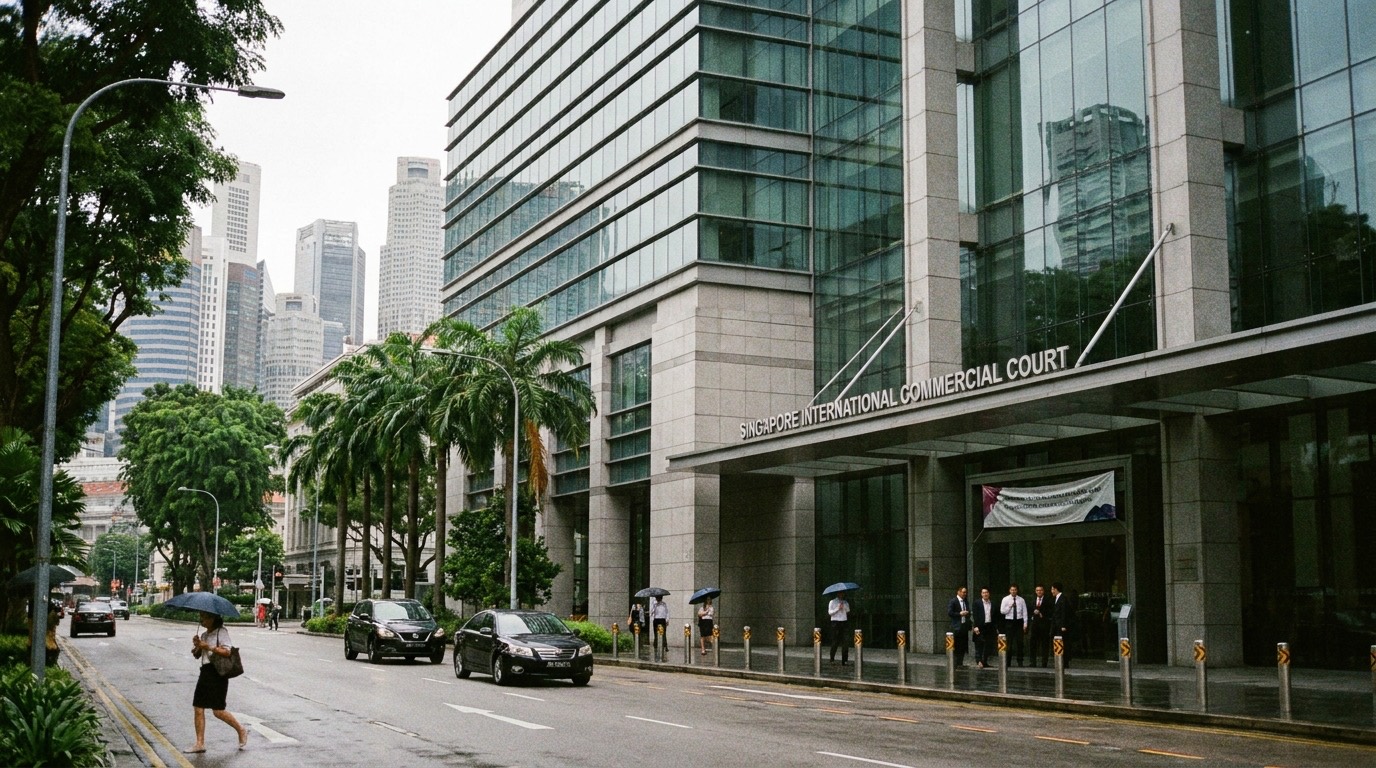
On 25 July 2025 the Singapore International Commercial Court (SICC) handed down judgment in Hulley Enterprises Ltd and others v The Russian Federation [2025] SGHC(I) 19. The court, composed of Andre Maniam J, James Allsop IJ and Anthony Meagher IJ, refused Russia's application to set aside an order that had given the claimants leave to enforce arbitral awards in Singapore. The decision was reported in a law firm's August 2025 round-up, and the full judgment is published on the Singapore courts' website.
What the court decided
The claimants, Hulley Enterprises, Yukos Universal and Veteran Petroleum, hold awards made in 2014 in Permanent Court of Arbitration proceedings seated in The Hague, brought under the Energy Charter Treaty. Addleshaw Goddard reports that the three awards total over US$63 billion. Russia asked the SICC to set aside the leave order, arguing that it was immune under section 3(1) of the State Immunity Act 1979 because it had never agreed in writing to arbitrate, so that the arbitration exception in section 11 did not apply.
The court rejected that argument at the preliminary stage. In summary, it held:
- Russia is precluded by issue estoppel from arguing that it did not agree in writing to arbitrate. The estoppel arises from final and conclusive decisions on the point by the Dutch appellate courts, namely the Hague Court of Appeal and the Dutch Supreme Court, which were the courts of the seat.
- The court followed the Singapore Court of Appeal's decision in Deutsche Telekom v India, which holds that transnational issue estoppel can apply even where the question concerns state immunity.
- Because Russia is bound on that point, the arbitration exception applies and Russia has no immunity under section 3(1). Russia is also precluded from re-litigating its other immunity objections.
The ruling is not the end of the enforcement application. The court indicated that directions would follow on a further stage, and that Russia must first set out the grounds on which it wishes to resist enforcement of the awards. Immunity, and any ground barred by transnational issue estoppel, cannot be among them. Allsop IJ gave a concurring opinion in which he noted that Deutsche Telekom binds the High Court and identified questions that could be considered on appeal, including whether a distinction exists for a state that denies consenting to the arbitration at all.
What it means for businesses and counsel
The following is our analysis rather than a statement of the judgment.
The decision illustrates a principle that matters well beyond sovereign disputes: a final decision of the seat court on a threshold question, such as the existence or scope of the arbitration agreement, may carry real weight in a foreign enforcement court. The Singapore judges treated the Dutch rulings as conclusive on the point rather than reopening it. Parties should not assume, therefore, that an objection lost at the seat can be run afresh where enforcement is sought. The reverse also holds: a favourable seat decision can strengthen an award creditor's position abroad.
For award creditors, the practical lesson is to build the record at the seat. If the respondent challenges jurisdiction before the courts of the seat, the reasoned outcome there is likely to matter later, and counsel should plan the enforcement strategy with that decision in view. For respondents, including state entities and their counterparties, the lesson is to raise consent and jurisdiction objections in the seat court and in the tribunal at the proper time, because there may not be a second chance.
The decision also shows how long and layered enforcement can be. Awards made in 2014 were still the subject of contested enforcement steps in Singapore in 2025. Parties negotiating contracts with large exposures should consider how many fora an award may need to travel through, and whether the chosen seat gives early and final answers.
A caveat is warranted. The judgment applies Singapore law and Singapore Court of Appeal authority, and it involved a state respondent and an investment treaty. Other courts, and ordinary commercial parties, may be treated differently, and the matter may yet be considered by a higher court.
Designing the forum with enforcement in mind
When choosing a seat, parties should ask how quickly and how finally the courts of the seat will decide any challenge to jurisdiction or to the award, because that decision may follow the award across borders. GIDI offers Geneva as a seat, where Chapter 12 of the Swiss Private International Law Act provides for narrow court review of awards, and where awards can be enforced under the New York Convention in more than 170 states.