Supreme Court of India endorses transnational issue estoppel: why the seat court now carries more weight at enforcement
On 25 March 2026 the Supreme Court of India refused to let award-debtors reopen at the enforcement stage points that the Singapore seat court had decided. The decision raises the stakes of the set-aside forum.
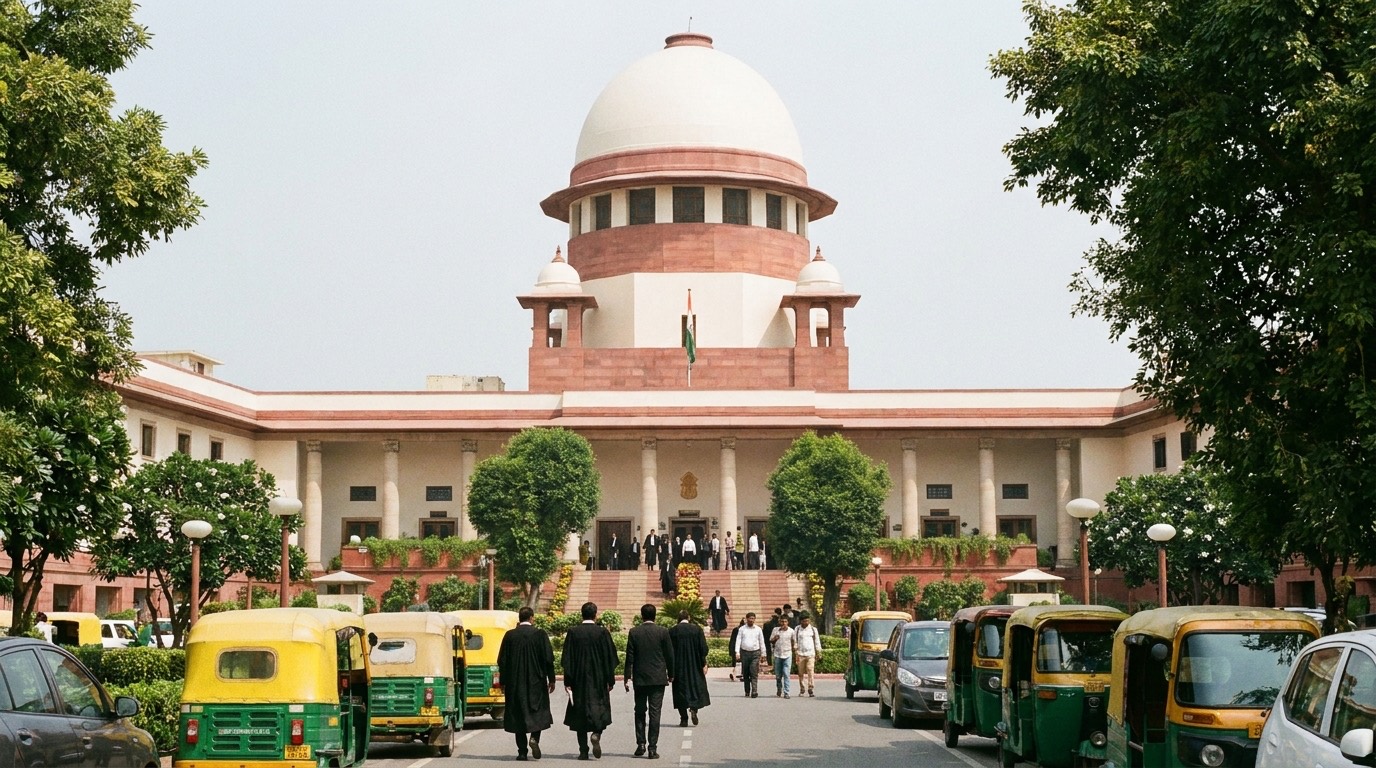
On 25 March 2026 the Supreme Court of India decided Nagaraj v. Mylandla (also cited as PI Opportunities Fund-I v. Nagaraj), dismissing special leave petitions against a Madras High Court order that had enforced a foreign arbitral award. In doing so it endorsed what commentators call transnational issue estoppel: where the court at the seat of the arbitration has decided an issue, the losing party cannot reopen it before the Indian enforcement court. The Kluwer Arbitration Blog describes this as the first endorsement of the doctrine at the apex-court level in India.
What happened
According to the Kluwer Arbitration Blog and a note on the Indian Review of Corporate and Commercial Laws blog, the dispute arose from a 2014 shareholders' agreement in Financial Software and Systems Private Limited, a Chennai-based payments company. An agreed structured exit did not take place. In 2022 the investors, including PI Opportunities Fund-I, began arbitration under the SIAC Rules, seated in Singapore. In July 2024 a three-member tribunal awarded them principal damages of INR 1,128.8 crore, roughly USD 135 million, plus interest and costs, with 90 days to pay and a fallback strategic sale if payment was not made.
The promoters challenged the award before the Singapore High Court on two grounds: that it directed an impermissible share buy-back, and that the investors had waived their rights. According to the Kluwer post, the Singapore court rejected both on 21 February 2025. In India the promoters recast the same two points as public-policy objections to enforcement. The Madras High Court rejected them and upheld enforcement in September 2025. The Supreme Court then dismissed the appeals.
The commentaries report the following points of principle:
- the enforcement court must still examine natural justice and Indian public-policy objections independently, but that review cannot become a disguised appeal on the merits;
- a seat court's findings on an issue cannot be reopened merely by reframing the issue as one of public policy;
- on the buy-back point, the Singapore court had treated the award as damages with a share surrender rather than a buy-back, and the Supreme Court declined to revisit it;
- public policy remains open to independent review in India, because a foreign court cannot decide what Indian public policy requires;
- the Court imposed costs of INR 25 lakh on the promoters, which the Kluwer post describes as penal.
Two points are left open. The commentaries note that the judgment does not clearly deal with objections the seat court did not decide, or that could have been raised earlier, and that it does not address awards set aside at the seat. We have not read the judgment itself, and the bench is not named in the sources we used.
What it means for contracts and disputes
The following is our analysis. It is based on commentary on one judgment from one jurisdiction, and each enforcement court will apply its own law.
The seat court is the main battleground. If the enforcement court gives weight to what the seat court has decided, the set-aside proceeding becomes the place where a debtor must make its whole case. A debtor that holds back an argument in the hope of using it later at the enforcement stage risks losing it. A creditor, for its part, should preserve a clear record of what the seat court decided and why.
Plan enforcement before you choose. Parties can no longer treat seat selection and enforcement planning as separate exercises. The question to ask is what a court in the place where the counterparty's assets sit is likely to do with a decision of the seat court, and whether that position is documented.
Choose the seat for the quality and scope of its review. A seat with narrow, defined grounds for review tells the parties early what will and will not be decided there. A seat with broad or uncertain grounds invites a second round of litigation that the enforcement court may or may not respect.
Expect cost consequences for recycled arguments. The Court's costs order signals that arguments already decided at the seat may now carry a price. Parties should factor that into any decision to resist enforcement.
Choosing a seat with enforcement in mind
Where a decision of the seat court may be relied on elsewhere, the clarity of that court's role matters. GIDI's seat is Geneva, where Chapter 12 of the Swiss Private International Law Act governs international arbitration, court review of awards is narrow, and awards are enforceable in more than 170 states under the New York Convention.