ICC 2026 Rules: what to check in your clauses and first procedural steps
The ICC published its 2026 Arbitration Rules on 22 May 2026, effective 1 June. A practical reading for contract drafters: Terms of Reference, expedited tracks, funding disclosure and secretaries.
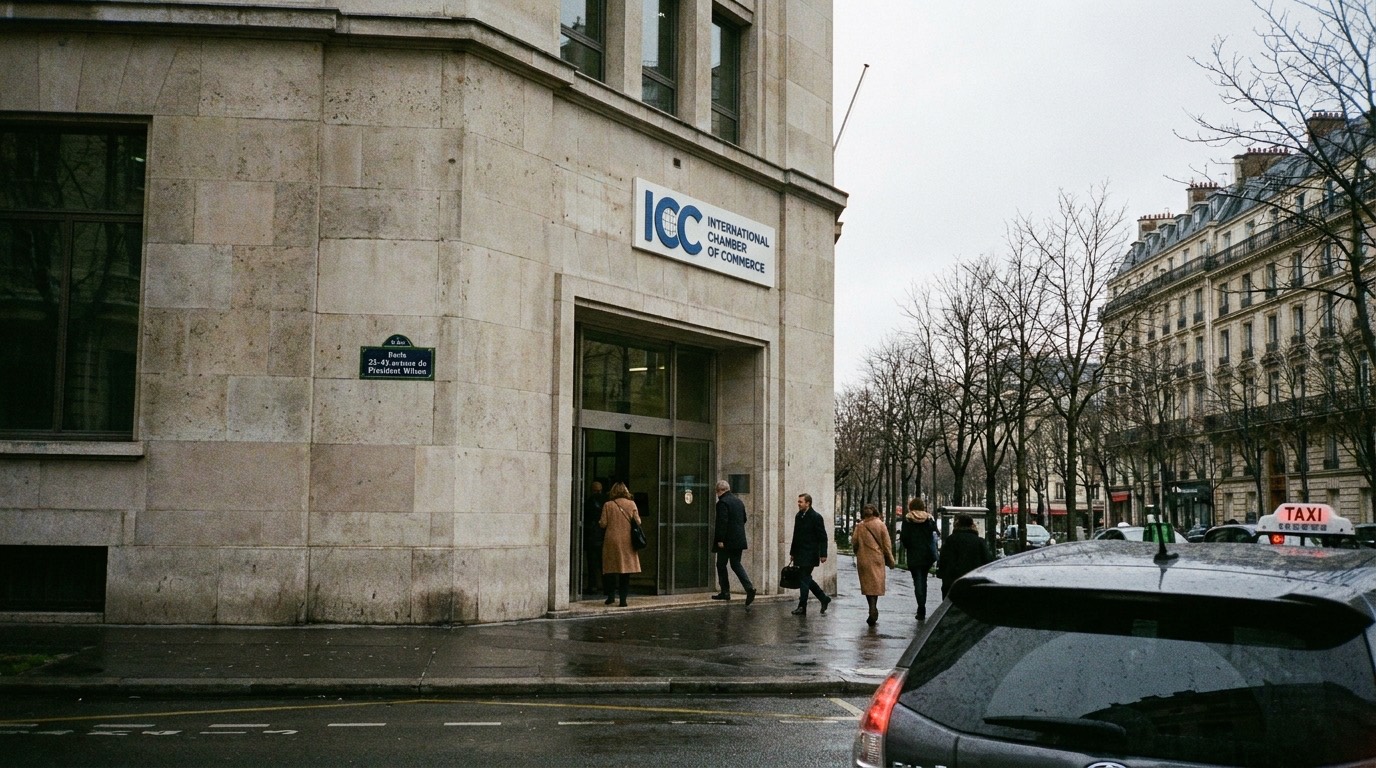
On 22 May 2026 the International Chamber of Commerce published the 2026 ICC Arbitration Rules, which replace the 2021 Rules from 1 June 2026. Law-firm alerts issued in the following days, including those of Clyde & Co (26 May) and Cleary Gottlieb (28 May), agree on the main changes. This note picks out the points that bear on how clauses and first-stage procedure are drafted. Article numbers are given as stated in those alerts and should be checked against the Rules themselves.
What changed
- Terms of Reference. They are no longer mandatory (Arts 23 and 24). Tribunals may still use them where they consider it appropriate. Without them, the cut-off for new claims is the initial case management conference, unless the tribunal authorises later claims (Art. 25).
- Early determination. A party may ask for a claim or defence that is manifestly without merit, or outside the tribunal's jurisdiction, to be disposed of without a final merits hearing (Art. 30(1)).
- Expedited procedure. The automatic threshold rises from USD 3 million to USD 4 million, but only for arbitration agreements concluded on or after 1 June 2026 (Appendix V, Art. 1(3)). Parties may opt in or out.
- Highly expedited arbitration. A new opt-in framework (Art. 33 and Appendix VI) applies only if all parties agree, either in the arbitration agreement or after a dispute arises. It uses a sole arbitrator, written submissions, no joinder or consolidation, and an award within three months of the initial case management conference. Parties may agree that the award is unreasoned. One alert describes it as a pilot.
- Emergency arbitrator. Preliminary orders may be made without prior notice, provided the other parties are promptly given an opportunity to be heard. Proceedings may be brought against any party where a binding arbitration agreement exists on a prima facie basis.
- Disclosure and secretaries. Disclosure alone does not show a lack of independence (Art. 12(4)). Parties must submit, at the outset, a reasoned list of connected persons and entities (Art. 12(5)), which the alerts link to third-party funding. Independence and impartiality requirements extend to tribunal secretaries (Art. 44(2)). Arbitrators have a codified confidentiality duty (Art. 12(8)), which does not bind the parties.
- Procedure. Electronic communication becomes the default. The six-month time limit for the final award is removed, and the ICC Court President sets the time limit.
What it means for contract drafting and conduct
The following is our analysis. First, check which version of the Rules your existing clauses point to. The higher expedited threshold applies only to newer agreements, so two contracts with the same wording can lead to different procedures.
Second, decide deliberately on the expedited tracks. Parties who want a fast, low-cost route for smaller disputes should consider opting in to the highly expedited framework in the clause itself, because it cannot be imposed later without agreement. Parties who prefer a conventional timetable should consider opting out of the standard expedited procedure. Before agreeing to an unreasoned award, parties should consider whether an award without reasons could meet difficulties in the countries where enforcement is likely.
Third, plead earlier. Where there are no Terms of Reference, the initial case management conference becomes the practical cut-off for new claims, so counsel should have the full case ready by then.
Fourth, prepare for funding disclosure. Funded parties should expect to identify connected entities and individuals at the start, and should collect that information before filing.
Fifth, do not rely on the arbitrators' confidentiality duty alone. Because it does not bind the parties, a confidentiality undertaking in the contract or a procedural order remains advisable.
Choosing the forum
The 2026 Rules give parties more options and place more weight on decisions taken at the drafting stage. The comparison between forums therefore turns on how easily procedure can be tailored, what it costs and who decides. A clause that names rules, a seat and a track at the outset avoids most of the uncertainty. At GIDI, parties choose their own rules, and with both parties' consent fully remote proceedings and an expedited procedure are available at lower cost, with published fees that scale with the amount in dispute.