EU proposes to defer high-risk AI Act obligations: what it means for AI use in arbitration
On 19 November 2025 the European Commission proposed to defer the AI Act's high-risk rules to as late as 2 December 2027. The AI Act already names AI used in alternative dispute resolution as a high-risk use case, so the proposal is worth reading alongside any AI protocol in an arbitration.
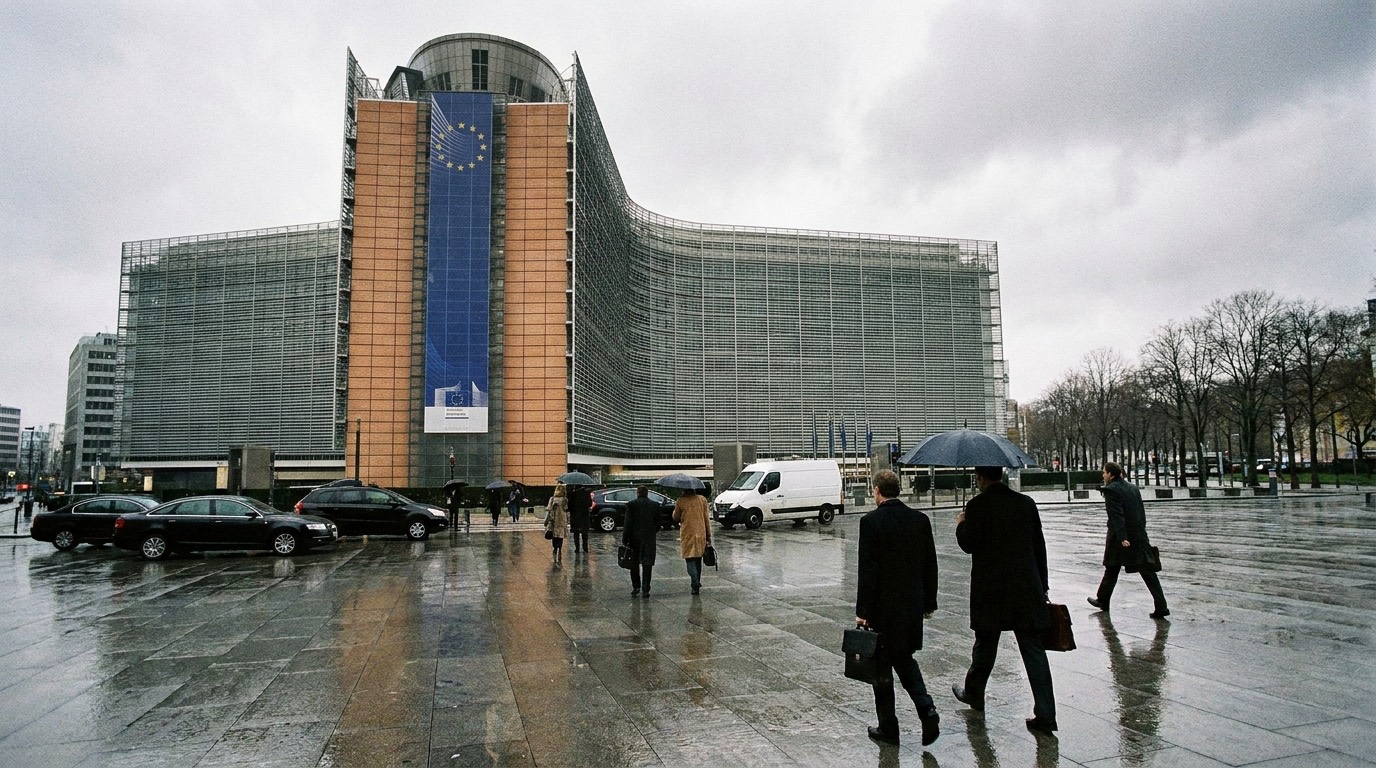
On 19 November 2025 the European Commission adopted its Digital Omnibus on AI (COM(2025) 836 final), a proposal to amend the EU AI Act. Its central change would postpone the application of the high-risk requirements, which the AI Act currently sets for 2 August 2026. The proposal has still to be considered by the European Parliament and the Council, so it may change.
What the Commission proposed
The Commission's explanation is that standards, common specifications and guidance supporting compliance have been delayed, as has the establishment of national competent authorities. It therefore proposes to link the start of the high-risk rules to the availability of those supporting measures, confirmed by a Commission decision. Following that decision, the rules would apply six months later for high-risk systems listed in Annex III to the AI Act and twelve months later for those covered by Annex I product legislation. Fixed outer dates would apply in any event: 2 December 2027 for Annex III systems and 2 August 2028 for Annex I systems. The proposal would also replace the current duty on providers and deployers to ensure the AI literacy of their staff with a duty on the Commission and the Member States to foster it, and extend certain simplifications for small enterprises to small mid-caps.
The link to dispute resolution lies in Annex III. Its point on the administration of justice covers AI systems intended to be used by a judicial authority, or on its behalf, to assist in researching and interpreting facts and the law and in applying the law to facts, or to be used in a similar way in alternative dispute resolution. The Commission's proposal does not change that wording.
What it does and does not tell you
The reported facts end there. Whether an arbitrator's use of a drafting, research or analysis tool falls within the phrase "in a similar way in alternative dispute resolution" is not settled by the text of the proposal, and nothing in the proposal tells a party whether a particular arbitral tool, tribunal or institution is covered. What follows is analysis, and it should be read as such.
In practice, a deferral should not be read as permission to proceed without a framework. First, the rules on the table concern the supply and deployment of AI systems; the parties' duties of confidentiality, data protection under the GDPR and fairness in the proceedings already apply to any tool used in an arbitration, whatever date the AI Act's high-risk rules start. Second, the uncertainty about coverage argues for contractual clarity: a party that wants to know whether, and how, a tribunal may use AI is better served by an express provision than by a regulatory classification that may only be resolved years later. Third, a longer runway for compliance gives parties time to set procedures, but it also means that early awards produced with AI assistance may be reviewed at enforcement under standards that are still being developed.
Parties drafting or reviewing dispute clauses and procedural orders may wish to consider the following:
- Agree early whether the tribunal and the parties may use AI tools, for which tasks, and with what disclosure.
- Keep decision-making with the human arbitrators, and record that AI output is checked by the person who relies on it.
- Address confidentiality of inputs, and whether any tool may retain or learn from case material.
- Consider the seat and the places of likely enforcement, since the regulatory treatment of AI is not uniform across them.
- Revisit these provisions when the proposal is adopted in its final form.
Choosing a forum that lets you set the AI rules
The practical lesson is that the rules for AI in arbitration are still being written, by regulators and by the parties themselves. A forum in which the parties choose their own rules, and may agree a bespoke procedure, lets them set an AI protocol now instead of waiting for the position to settle. GIDI works on that basis, and its secretariat administers proceedings but never decides disputes, which keeps the role of the human tribunal distinct from that of the institution.