English Divisional Court on fake AI citations: what the Ayinde judgment means for arbitral counsel
On 6 June 2025 the Divisional Court of England and Wales warned that lawyers who use AI for legal research must verify it against authoritative sources. The judgment concerns courts, but its logic carries over to arbitral proceedings.
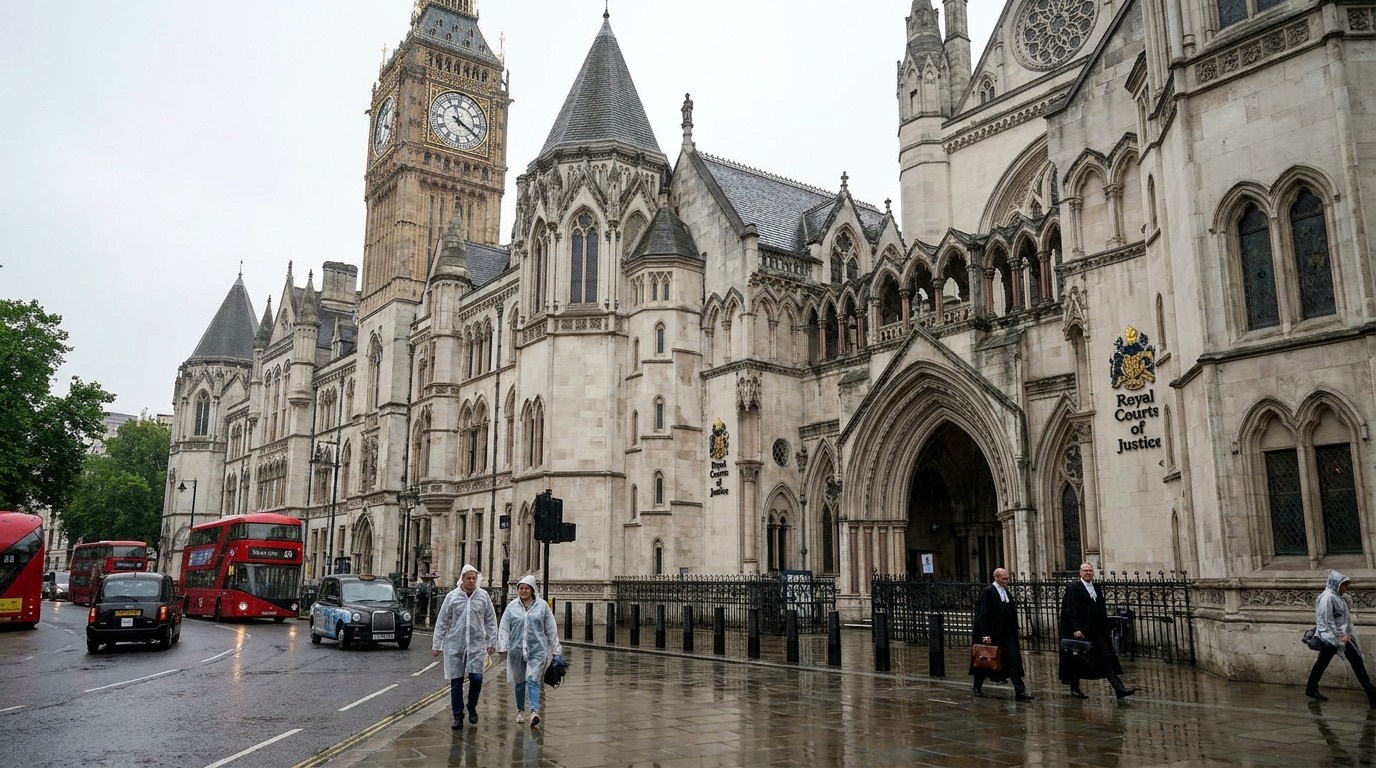
On 6 June 2025 the Divisional Court of the King's Bench Division in London, comprising Dame Victoria Sharp and Johnson J, handed down judgment in two linked matters, Ayinde v London Borough of Haringey and Al-Haroun v Qatar National Bank ([2025] EWHC 1383 (Admin)). Both involved written submissions citing authorities that did not exist or did not say what was claimed. The hearing had taken place on 23 May 2025, and the court sat under its Hamid jurisdiction, which allows it to supervise the conduct of lawyers appearing before the courts.
What the court found
In Ayinde, judicial review grounds settled by a barrister cited five non-existent cases and misstated the effect of section 188(3) of the Housing Act 1996. A judge had earlier made a wasted costs order of GBP 2,000 each against the barrister and the law centre. In Al-Haroun, a claim for GBP 89.4 million against Qatar National Bank and QNB Capital, 18 of the 45 citations listed in a schedule did not exist, and many others did not contain the passages quoted or support the propositions for which they were cited. The solicitor accepted that he had relied on the client's own research without checking it.
The Divisional Court stated that generative AI tools "are not capable of conducting reliable legal research", because they can produce plausible but entirely incorrect answers. Lawyers who use them have a professional duty to check the accuracy of the output against authoritative sources. The court added that heads of chambers, managing partners and regulators must now take practical and effective measures, and that existing guidance from professional bodies was not sufficient on its own.
On sanctions, the court found that the threshold for contempt proceedings was met in Ayinde but chose not to initiate them, and said that this was not a precedent. It referred the lawyers concerned to their regulators, and said that a mere admonishment would rarely be enough. It found that the contempt threshold was not met in Al-Haroun, because the solicitor had not realised that the citations were false.
What it means for arbitration
The judgment concerns court proceedings in England and Wales and does not bind any arbitral tribunal. The following is our analysis. Tribunals generally rely on counsel for the accuracy of authorities, often without the time or the library resources that a court can bring to bear, and an international tribunal may be composed of arbitrators who share no national bar or regulator with counsel. A fabricated citation in a pleading is therefore at least as damaging in arbitration as in court, and the tribunal's remedies are different: it can reprimand counsel, draw adverse inferences about reliability, and take the episode into account in costs, but it has no contempt jurisdiction.
In practice, three consequences follow for parties and their counsel:
- Verification is a matter of process, not goodwill. Citations and quotations in submissions should be checked against the primary source by a named person before filing, and the internal workflow should record who did so.
- Client-supplied research needs the same checking as research from any other source. Al-Haroun shows that an honest reliance on a client's material does not protect the lawyer who files it.
- Agreeing the rules in advance is cheaper than arguing about them later. Parties should consider addressing, in the arbitration agreement or in the first procedural order, whether AI tools may be used in preparing submissions, whether their use must be disclosed, and what consequences follow if an authority proves to be fictitious.
It is worth stressing what the court did not say. It did not prohibit the use of AI by lawyers. It restated an existing duty of competence and candour and applied it to a new tool. A clause that bans AI outright may be hard to police and may deprive parties of efficiency gains; a clause that requires verification and allows the tribunal to ask for the source of any contested citation is easier to apply.
Designing the forum around the issue
For parties drafting a dispute resolution clause today, the lesson is to decide how technology will be handled before a dispute arises, while both sides are still cooperative. That points to a forum which lets the parties set the procedural rules rather than inheriting a fixed template. GIDI administers arbitrations under rules the parties choose, including UNCITRAL or a bespoke procedure, so provisions on AI use, disclosure and verification can be written into the process from the outset, with the secretariat administering the case and the tribunal alone deciding it.