D.C. Circuit in Deutsche Telekom v India: a treaty award from Switzerland returns to court on arbitrability
On 3 October 2025 the D.C. Circuit let enforcement proceed against India but sent back a US$93.3 million treaty award, holding that India may still argue the dispute was outside the treaty's scope.
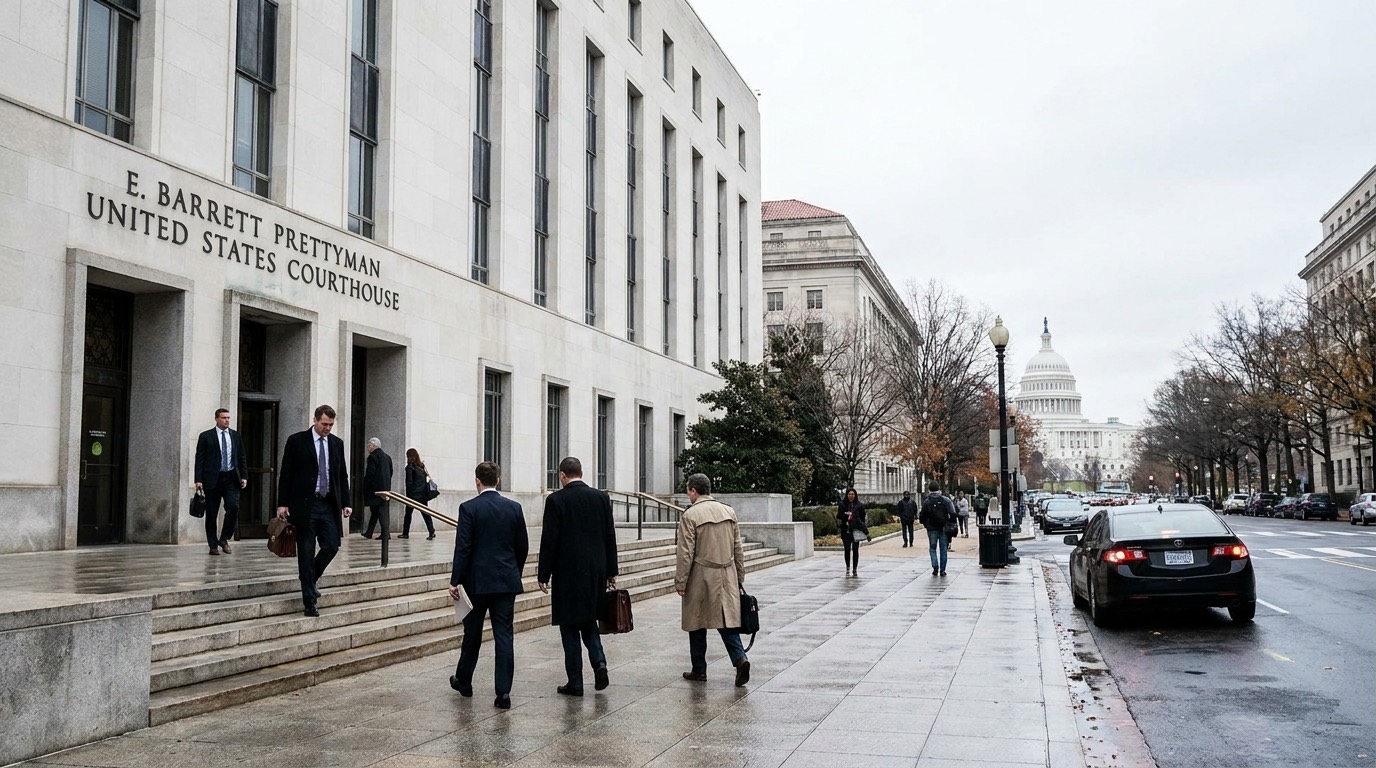
On 3 October 2025 the United States Court of Appeals for the D.C. Circuit decided Deutsche Telekom, A.G. v. Republic of India (No. 24-7081), in an opinion by Circuit Judge Katsas, joined by Chief Judge Srinivasan and Senior Circuit Judge Rogers. The court affirmed the refusal to dismiss India's case on sovereign immunity and forum non conveniens grounds, but vacated the district court's judgment confirming the award and remanded the case. The result is a partial win for each side, and it carries lessons for anyone enforcing or defending a treaty award against a state.
The dispute and the decision
The facts below are taken from the court's opinion. In 2005 Antrix Corporation, a space company wholly owned by India, entered into a venture with Devas Multimedia, an Indian company, to lease spectrum on two satellites. Deutsche Telekom later agreed to invest nearly US$100 million in Devas through a Singaporean subsidiary. In 2011 India decided to retain the spectrum and caused Antrix to terminate the deal. Deutsche Telekom claimed a breach of the Germany-India investment treaty and began UNCITRAL arbitration against India in Switzerland.
India objected that the dispute fell outside the treaty because Deutsche Telekom had invested through a Singapore entity and because Devas's activities were only pre-investment activities. The tribunal rejected those objections. The Swiss Federal Supreme Court reviewed them de novo and rejected them in a decision of 11 December 2018, and it rejected a request for revision in March 2023. The final award was for US$93.3 million. Courts in Germany and in Singapore also rejected India's arguments. Deutsche Telekom then sought confirmation in the US District Court for the District of Columbia.
The D.C. Circuit held as follows:
- Immunity and forum. The arbitration exception in the Foreign Sovereign Immunities Act applied. Arguments that the dispute involved no covered investor or investment go to the scope of the arbitration agreement and are merits defences under the New York Convention, not jurisdictional objections. The court also reaffirmed that forum non conveniens does not apply to proceedings to confirm international awards, because the purpose is to reach assets elsewhere.
- Who decides scope. The district court had held that the treaty's incorporation of the UNCITRAL Rules delegated questions of scope exclusively to the arbitrators. The D.C. Circuit disagreed on these facts. It did not retreat from earlier decisions that incorporating those rules can suffice, but noted that German and Indian law allow courts to review arbitrability even after arbitrators have ruled, and that the treaty provides for enforcement in accordance with the national laws of the country where the investment was made. That context cut against a clear intention to bar courts from considering arbitrability at the enforcement stage.
- Foreign judgments. Whether the judgments of the Swiss, German and Singapore courts should be given preclusive effect was left open for the district court on remand.
- Other defences. India's other merits defences, including a national-security exception and an allegation of fraud in the underlying contract, were not forfeited, because its immunity arguments were colourable and the court accepted that a sovereign may raise immunity first and merits defences afterwards.
What it means in practice
This section is our analysis, not part of the opinion.
For investors, the decision is a reminder that a favourable award and favourable seat-court decisions do not guarantee a quick confirmation in a US court. The tribunal and the Swiss Federal Supreme Court had both examined the investor and investment objections, and the question may still be argued again. How much weight the US court will give to those earlier rulings is, for now, undecided. Investors should plan for a long enforcement phase and for enforcement against a state to be taken in stages.
For states and their counterparties, the decision shows that arbitrability objections can survive the arbitration and the seat court, subject to the issue-preclusion question left open. That does not make such objections likely to succeed. It confirms only that they may be heard.
For contract and treaty drafters, the most useful point is the court's emphasis on context. Incorporating institutional or UNCITRAL rules is not always enough to say that tribunal decisions on scope are final. Parties who want the tribunal's ruling on scope to be binding should say so expressly. Those who prefer court review should say that instead, and should consider how the chosen law of enforcement treats the question.
The decision also illustrates the time scale: the events date from 2011, the Swiss decisions from 2018 and 2023, and the appellate ruling from 2025, with proceedings continuing.
Choosing a forum where a state is a party
Where one party is a state or state entity, the credibility of the forum matters as much as the seat. GIDI is independent of any state, chamber of commerce, trade body or law firm, accepts no state funding, and its secretariat administers proceedings but never decides them, which may help parties on both sides of a state-related dispute to accept the process as neutral.